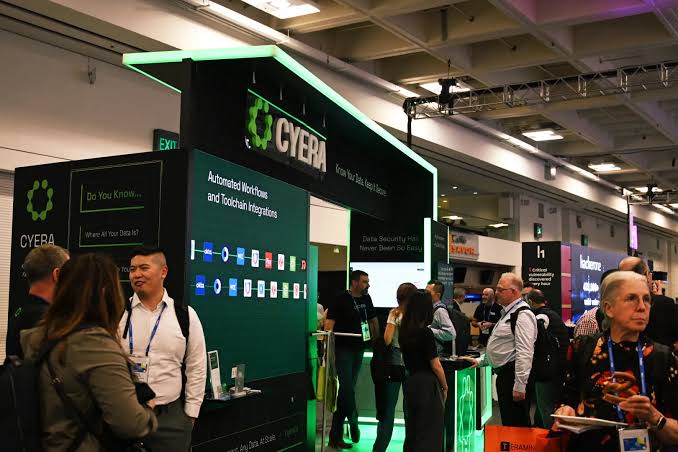

Cyera has raised another $400 million from Goldman Sachs Alternatives, extending its Series G financing as the cybersecurity company expands its focus from data protection into securing AI agents and other non-human identities.
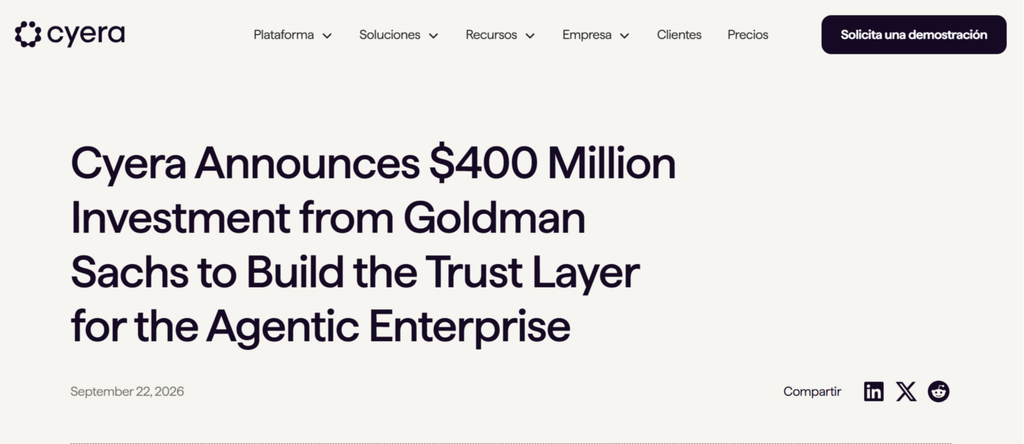
The September 22 investment extends a $600 million Series G round announced in June, when Cyera was valued at $12 billion. The latest financing brings the company’s total funding since June 2025 to approximately $1.94 billion, according to The Wall Street Journal.
The bigger story behind the funding is not simply another large cybersecurity round. Cyera is betting that the rapid adoption of AI agents will create a new enterprise security layer around what autonomous software can access, what it can do and which identities it uses to perform those actions.
What Happened?
Cyera announced that Growth Equity at Goldman Sachs Alternatives invested $400 million as an extension of its Series G financing.
The company says the capital will support its AI security product roadmap, expansion in the U.S. federal market and continued international growth across Europe, the Middle East, Africa and Asia-Pacific.
The financing follows a year of aggressive expansion.
Cyera raised $400 million in January 2026 at a $9 billion valuation, followed by the $600 million Series G financing in June at a $12 billion valuation. The latest $400 million extension brings the Series G total to $1 billion.
The company now says it is valued at more than $12 billion.
Why AI Agents Are Changing Enterprise Security
AI agents differ from conventional software because they can take actions rather than simply provide information.
An agent may reason through a task, call an external tool, access a database, retrieve sensitive information or update another application.
That creates a security problem that looks different from protecting a traditional application.
A human employee typically has a recognizable identity and defined permissions. An autonomous AI system may operate through service accounts, API credentials or other machine identities while interacting with multiple systems.
Cyera argues that much of today’s enterprise security architecture was designed around people and applications, not potentially millions of autonomous software actors.
That distinction is central to the company’s latest strategy.
Cyera Is Combining Data and Identity Security
Cyera built its business around data security, giving organizations visibility into sensitive information across cloud, SaaS, databases and other environments.
The company is now combining that capability with identity security.
Earlier this month, Cyera completed its acquisition of Oasis Security for approximately $1 billion. Oasis specializes in non-human identity management, including identities used by AI agents and automated software systems.
The combination gives Cyera a way to connect two questions that are increasingly related:
What sensitive data does an organization have?
and
Which humans, machines or AI agents can access it?
For companies deploying AI agents, answering the second question may become just as important as answering the first.
The Rise of Non-Human Identities
A non-human identity can represent a machine, application, service account or automated software process that needs credentials to access a system.
These identities are not new.
What is changing is their potential scale and autonomy.
An AI agent can use credentials to move through enterprise systems while completing a multi-step workflow. If its permissions are too broad, a mistake or compromise could potentially expose information or trigger actions beyond what the organization intended.
Cyera says its strategy is to provide a unified platform for governing access by humans, machines and AI agents.
The company’s AI workflow and AI automation glossary pages provide useful background on the systems that make these new agent-based workflows possible.
Cyera Wants to Monitor What Agents Actually Do
Cyera’s AI security strategy extends beyond deciding whether an agent should have access.
The company says its products can provide visibility into agent activity, including interactions with tools, data and enterprise systems.
That matters because permissions alone do not necessarily reveal what an autonomous system is doing.
Consider an AI agent responsible for completing an employee onboarding process. It might need to retrieve information from an HR system, create an account, contact another service through an API and update an internal database.
Each action could involve a different permission and a different security risk.
Cyera’s approach is to bring those activities into a broader data-and-identity security framework.
The company calls this its “trust layer for the agentic enterprise.” That phrase is Cyera’s description of its strategy, rather than an independently established industry standard.
Investors Are Putting Serious Money Into AI Security
Cyera’s financing comes during a broader surge in cybersecurity investment.
The Wall Street Journal reported that cybersecurity companies are attracting increased investor attention as organizations confront security risks associated with AI. Cyera’s latest round is notable even within that larger funding environment.
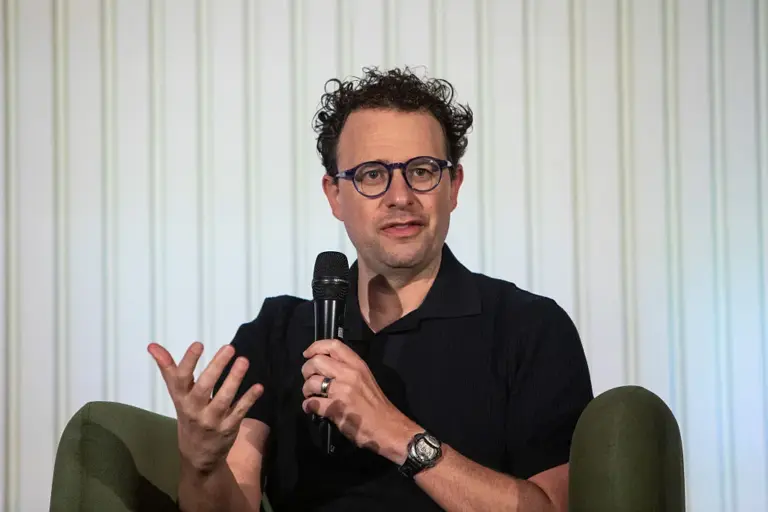
Cyera also recently signed its first customer worth more than $10 million annually, according to CEO Yotam Segev’s comments reported by The Wall Street Journal.
At the same time, Segev acknowledged that widespread adoption of these newer AI-security technologies remains at an early stage. That distinction is important: enterprise interest may be growing rapidly, but not every company is ready to deploy autonomous AI systems at scale.
AI Security Is Moving Beyond Traditional Data Protection
The emerging market Cyera is targeting reflects a broader change in enterprise technology.
Companies are moving from asking whether they should use AI toward deciding how much autonomy AI systems should have.
That creates several security questions:
- Which AI agents should have access to sensitive information?
- What permissions should each agent receive?
- How should organizations monitor agent activity?
- What happens when an agent makes an unexpected decision?
- How can companies revoke access quickly?
- How should machine identities be governed as the number of agents grows?
These questions become more complicated as AI systems move deeper into business workflows.
QueryFeedz’s existing coverage of AI systems and AI reasoning can provide additional technical context.
What Happens Next?
Cyera plans to use the new capital to continue developing AI security capabilities, expand its federal business and grow internationally. The company also has additional room for acquisitions following its Oasis Security purchase.
For the cybersecurity industry, the company’s strategy points toward a market where securing AI is no longer limited to protecting the model itself.
The surrounding ecosystem matters too.
As AI agents gain access to enterprise applications, databases, APIs and sensitive information, companies will need to understand not only which systems are connected to AI, but also which AI systems can act inside those environments and what they actually do.
Cyera’s $400 million financing is a substantial bet that this problem will become a major enterprise security category.
Whether the market develops at the pace investors expect remains uncertain. But the rapid growth of autonomous AI systems is already forcing security teams to rethink an architecture that was largely designed around human users and conventional applications.